

Table of Contents
The story of the hunchback of Notre Dame Notre Dame has fascinated readers for nearly two centuries. Most people know Quasimodo as a tragic, fictional bell-ringer, but the deeper question remains: was there ever a real person behind the legend?
Short answer: The hunchback of Notre Dame is primarily a fictional character created by Victor Hugo, but historical records suggest he may have been inspired by a real humpbacked stone carver who worked on the cathedral in early 19th-century Paris.
The Hunchback in Literature
When people think of the hunchback of Notre Dame, they usually picture Quasimodo, the deformed bell-ringer from Victor Hugo’s 1831 novel. His story is bleak, far removed from modern adaptations.
In Hugo’s version, Quasimodo is abandoned as a child and raised by Claude Frollo, the archdeacon of Notre Dame. Hidden away in the cathedral’s towers, he grows up isolated from society.
His brief encounter with kindness comes through Esmeralda, a young woman who shows him compassion. The story spirals into jealousy, betrayal, and ultimately tragedy. Quasimodo’s fate is tied closely to hers, ending in sorrow rather than redemption.
It’s a powerful narrative, but it wasn’t written as history. Hugo drew heavily on imagination, folklore, and the atmosphere of medieval Paris, part of the rich culture of the medieval period.
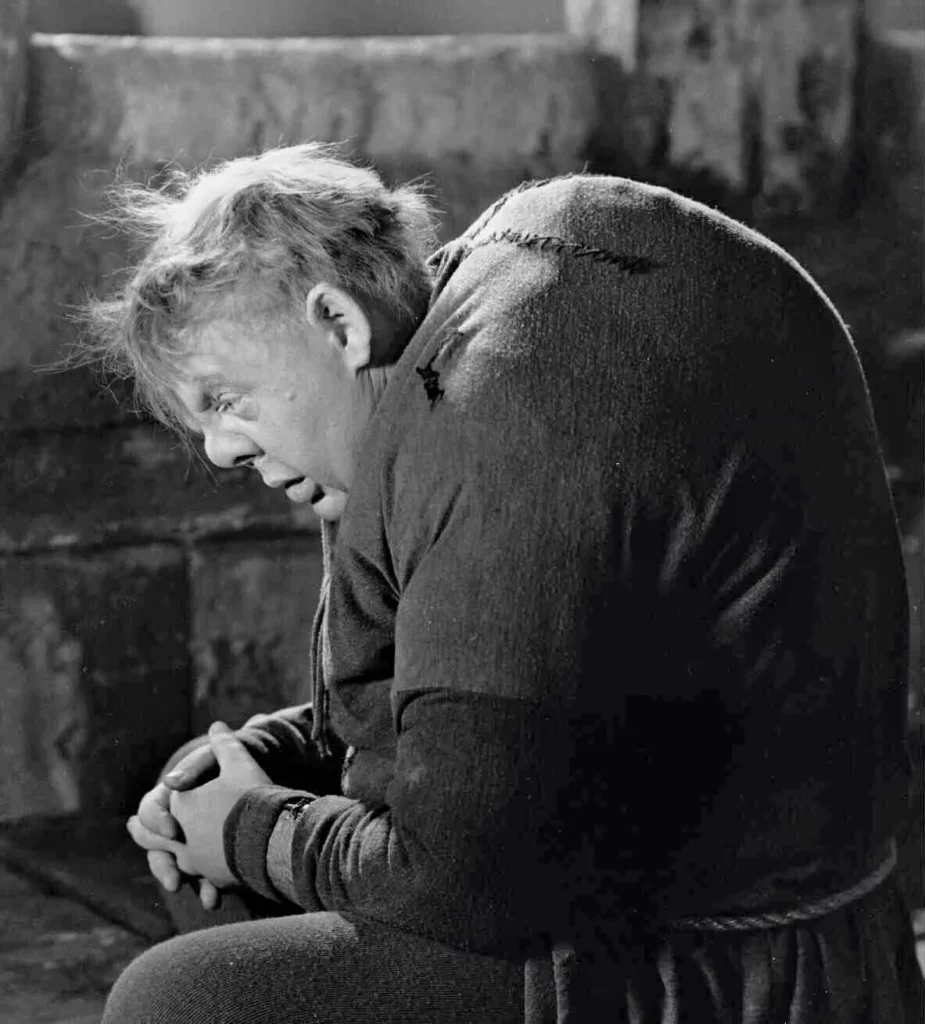
Is the Hunchback of Notre Dame Real?
The question often comes up: is the hunchback of Notre Dame real? The honest answer sits somewhere in the middle.
There is no record of a man named Quasimodo serving as a bell-ringer in medieval Notre Dame. However, evidence from the 1800s points to a real individual whose life may have influenced Hugo’s writing.
This is where the hunchback of Notre Dame real story begins to take shape.
A Hunchbacked Sculptor in Paris
After the French Revolution, Notre Dame Cathedral fell into serious disrepair. By the 1820s, restoration work was underway, bringing in craftsmen from across Europe.
One of them was a British sculptor named Henry Sibson. In his memoirs, Sibson described his time working in Paris and mentioned several colleagues, including a man known only by a nickname: Le Bossu, meaning “the hunchback.”
According to Sibson:
- The man was a skilled stone carver
- He had a noticeable spinal deformity
- He kept to himself and avoided social interaction
- He worked under government supervision on restoration projects
Sibson never recorded the man’s real name. Still, the description is strikingly similar to the kind of figure Hugo later brought to life.
Another craftsman, Monsieur Trajan, also appears in these accounts, helping historians place these individuals in a real working environment tied to Notre Dame.
Connecting Victor Hugo to the Real Hunchback
Victor Hugo lived in Paris during the same period these restoration works were taking place. More interestingly, he lived near the same artistic circles and workshops.
Archival records suggest that:
- Hugo resided in areas close to the craftsmen working on Notre Dame
- The artisans mentioned in Sibson’s memoir appear in official Paris directories
- Hugo had direct exposure to the restoration efforts and those involved
There’s no document stating Hugo met Le Bossu. Still, the overlap is hard to ignore. The idea that Hugo observed or heard stories about a real hunchbacked worker is entirely plausible.
This possibility has led many historians to cautiously say that the hunchback real figure behind Quasimodo likely existed, even if his story was heavily fictionalized.
Names That Echo Through Hugo’s Work
There’s another curious detail. Hugo later wrote Les Misérables, where the main character became Jean Valjean. Early drafts used the name “Jean Trajean,” which closely resembles the name Trajan, the stone carver mentioned by Sibson.
It’s a small clue, but it reinforces the idea that Hugo borrowed from real people around him, blending observation with imagination.
Notre Dame as the True Main Character
To understand the novel, it helps to shift perspective. Hugo didn’t just write about a man. He wrote about a building.
He was deeply concerned about the neglect of Gothic architecture in France. In fact, he argued passionately for preservation in his essays and public writings.
In his own words, the cathedral itself was the central figure of the story. Everything else revolved around it.
Quasimodo reflects that idea. Like Notre Dame, he is:
- Misunderstood
- Visually imposing
- Quietly enduring
- Capable of unexpected beauty
This symbolic connection is part of why the story has lasted so long. It isn’t just about a man. It’s about how society treats what it doesn’t understand.
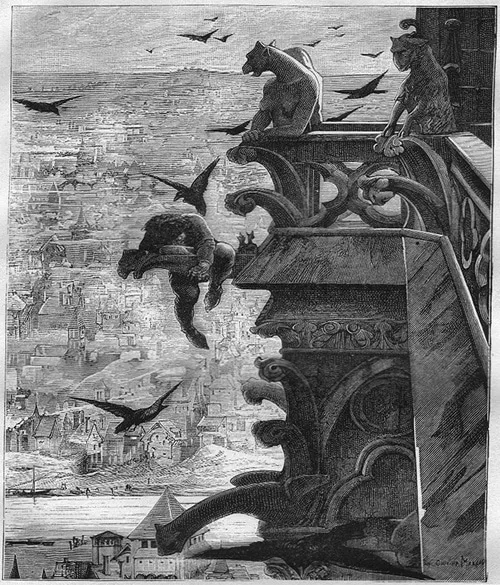
Separating Myth from History
So where does that leave us?
The hunchback of Notre Dame Notre Dame story exists in two layers:
- A fictional narrative created by Victor Hugo
- A possible real-life inspiration rooted in 19th-century Paris
The real man, if he inspired Quasimodo, was not a tragic bell-ringer caught in a dramatic love story. He was likely a skilled laborer, part of the workforce that helped restore one of France’s most famous landmarks.
Unlike many notable figures from history, his name has been lost. What remains is a shadow of his existence, preserved through memoirs and speculation.
Why the Legend Endures
The story continues to resonate because it touches on something universal. Isolation, compassion, injustice. These themes don’t fade with time.
And there’s something else. The possibility that a real person stood behind the legend makes it feel closer, more human.
We may never know who Le Bossu truly was. But his presence, however faint, adds a layer of reality to one of literature’s most enduring tales.
FAQ
Was the hunchback of Notre Dame a real person?
There is no confirmed historical figure named Quasimodo, but records suggest a real humpbacked stone carver, known as “Le Bossu,” worked on Notre Dame and may have inspired the character.
What is the real story behind the hunchback of Notre Dame?
The fictional story comes from Victor Hugo’s novel, but it may have been influenced by real workers involved in the cathedral’s restoration during the 1820s.
Did Victor Hugo meet the real hunchback?
There is no direct evidence that Hugo met him, but they lived in the same area of Paris, making it possible he observed or heard about him.
Why did Victor Hugo write The Hunchback of Notre Dame?
Hugo wrote the novel partly to raise awareness about the neglect of Gothic architecture and to encourage preservation of landmarks like Notre Dame Cathedral.
Is Quasimodo based entirely on one person?
No. Quasimodo is a fictional creation likely shaped by multiple influences, including folklore, Hugo’s imagination, and possibly real individuals.
