

Table of Contents
Margaret Howe Lovatt was a young naturalist in the 1960s who became known for her role in an unusual research project that aimed to teach dolphins to communicate in English. Her close work with a dolphin named Peter later drew intense scrutiny, raising lasting ethical questions about animal research and human-animal relationships.
The story of margaret howe lovatt sits at the intersection of science, counterculture experimentation, and controversy. It remains one of the most talked-about cases involving animal cognition studies and blurred professional boundaries.
The Setting: Science Meets Counterculture
The mid-1960s were a period of bold experimentation. Against the backdrop of social upheaval, scientists explored unconventional ideas, including communication across species.
On the Caribbean island of St. Thomas, neuroscientist John C. Lilly established a research facility often referred to as a dolphinarium. His goal was ambitious: determine whether dolphins could learn and reproduce elements of human speech.
Margaret Lovatt, who had no formal scientific training but a deep interest in animal behavior, volunteered at the lab. Her curiosity and dedication quickly drew Lilly’s attention, and she became deeply involved in the project.
This experiment has since been grouped with other contemporary historical events that pushed ethical and scientific boundaries.
Living With Dolphins: An Unusual Approach
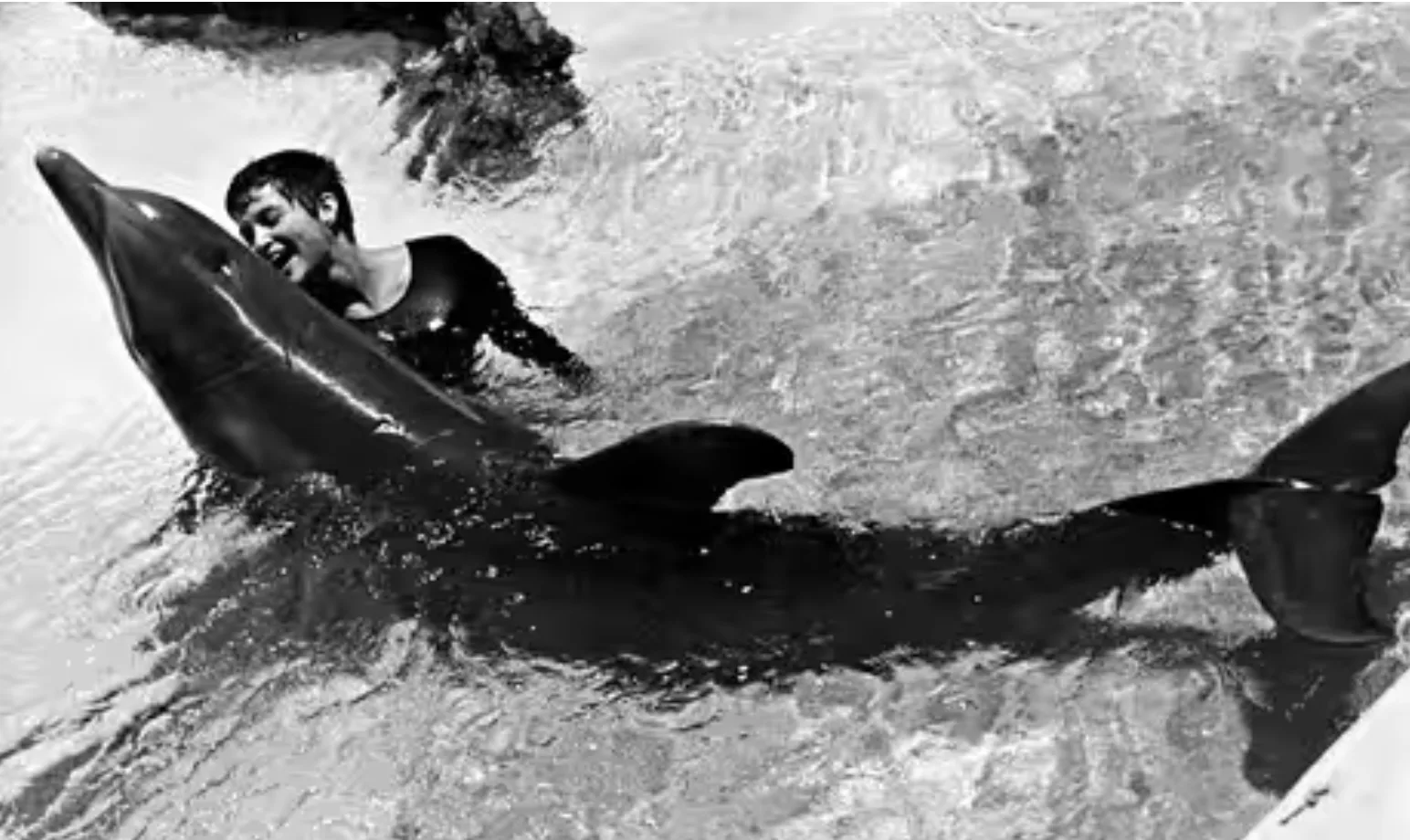
Rather than observing dolphins from a distance, Lovatt adopted a more immersive strategy. She lived alongside the animals in a partially flooded living space, attempting to replicate how humans teach language to children.
Her primary subject was a young bottlenose dolphin named Peter. The idea was simple in theory: constant exposure to human speech might encourage mimicry.
How Margaret Howe Tried to Teach Language
Lovatt’s daily routine revolved around interaction, repetition, and observation. She recorded Peter’s responses and adjusted her approach accordingly.
- Speaking slowly and clearly to emphasize sounds
- Repeating simple words and phrases such as greetings
- Monitoring behavioral changes twice daily
- Encouraging vocal imitation through tone variation
Some progress appeared to occur, though certain sounds proved difficult for the dolphin to replicate. The experiment never reached the point of meaningful spoken language.
The Relationship Between Peter and Margaret
Over time, the relationship between peter and margaret dolphin shifted beyond structured research. Spending nearly all her time with the animal, Lovatt developed a strong emotional connection with Peter.
Peter, meanwhile, was an adolescent dolphin. His natural behavior began interfering with training sessions, creating a problem for the research.
Lovatt later described how she chose to handle these disruptions in a way that kept the sessions continuous. Her actions became the most controversial aspect of the entire experiment.
While she framed her behavior as practical and related to the study, many observers saw it differently. The situation sparked widespread debate and remains difficult to separate from the scientific goals of the project.
Public Reaction and Ethical Concerns
Once details of the experiment reached the public, the reaction was swift and intense. Critics questioned not only Lovatt’s actions but the broader oversight of such research.
Several key concerns emerged:
- The ethical limits of human-animal interaction
- The psychological welfare of intelligent marine mammals
- The lack of clear boundaries in experimental design
- Confusion surrounding other experiments, including rumors involving LSD
It is worth noting that reports of drug use were often conflated with separate studies conducted by John Lilly. There is no clear evidence that Lovatt administered such substances to Peter.
Still, the controversy overshadowed the scientific aims. The project became less about language learning and more about ethics.
The End of the Experiment
Funding eventually ran out, bringing the dolphinarium project to an abrupt close. Lovatt and Peter were separated, ending nearly two years of close interaction.
Peter was transferred to a facility in Miami. Conditions there were markedly different from the environment he had known.
Not long afterward, Peter died. Dolphins are voluntary breathers, meaning they must consciously surface for air. Reports described his death as a form of self-induced drowning, though interpretations vary.
Some attributed his decline to separation stress, while others pointed to the conditions of his new enclosure. The truth remains debated.
Scientific Impact and Cultural Legacy
From a research standpoint, the experiment did not achieve its central goal. Dolphins did not learn to speak English in any meaningful sense.
Yet the story endured. Media coverage, including sensationalized accounts, ensured that the girl who talked to dolphins became part of popular culture.
Within scientific circles, the case became a cautionary example. It highlighted the need for clearer ethical standards and stricter oversight in animal research.
Today, margaret howe is often mentioned among notable figures in history tied to controversial scientific episodes.
Why the Story Still Matters
The case of margaret howe lovatt forces uncomfortable questions. How far should research go? Where should boundaries be drawn when studying intelligent animals?
It also reveals how quickly scientific curiosity can collide with moral concerns. What began as an attempt to bridge communication between species became something far more complicated.
Decades later, the story still lingers, not because of what was achieved, but because of what it revealed about human behavior.
FAQ
Who is Margaret Howe Lovatt?
Margaret Howe Lovatt was a naturalist who participated in a 1960s experiment aimed at teaching dolphins to communicate in English.
What was the goal of the dolphin experiment?
The project aimed to determine whether dolphins could mimic and understand human speech through constant exposure and interaction.
Did the dolphin Peter learn to speak English?
No, the experiment did not result in dolphins learning to speak English in any meaningful or functional way.
Why is the experiment controversial?
The controversy centers on ethical concerns, particularly the nature of Lovatt’s interactions with Peter and the lack of clear research boundaries.
What happened to Peter the dolphin?
After the experiment ended, Peter was relocated to a facility in Miami, where he later died under disputed circumstances.
