

Table of Contents
Sanju Bhagat: The Man Who Lived With His Twin Inside Him
The story of Sanju Bhagat is one of the most unusual medical cases ever recorded. Born in India in 1963, he appeared healthy for much of his early life. Yet by adulthood, he carried a secret hidden within his body, one that would shock doctors and capture global attention.
Short answer: Sanju Bhagat was an Indian man whose severely swollen abdomen was eventually discovered to contain the partially formed remains of his twin. This rare condition, known as fetus in fetu, meant he had unknowingly lived as a “man with twin inside him” for over three decades.

A Life Marked by Mystery
Sanju Bhagat grew up in Nagpur, a city in central India. By all accounts, his childhood was ordinary. There were no immediate signs that anything was unusual about his health. Like many in his community, he later worked manual jobs, relying on physical labor to support himself and his family.
But in his late twenties, something began to change.
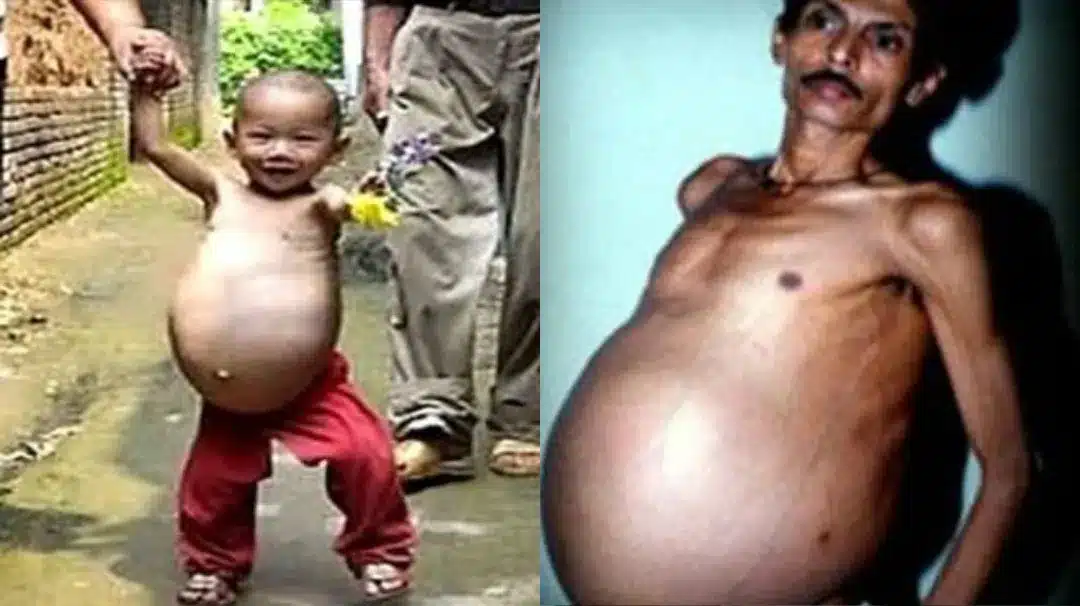
His abdomen started to swell. At first, it may have seemed like simple weight gain, though that didn’t quite make sense. Bhagat lived modestly and often struggled to afford enough food. Yet his belly continued to expand, gradually becoming the most noticeable feature of his body.
Neighbors began to mock him. Some compared his appearance to that of a pregnant man. The nickname stuck, and the attention was rarely kind.
Despite this, Bhagat carried on. He worked, endured the discomfort, and avoided seeking medical help. Missing work wasn’t an option for someone already living on the edge of poverty.
When the Body Can No Longer Cope
Over time, the swelling became more than an embarrassment. It turned dangerous.
The pressure inside his abdomen grew so intense that it began to interfere with his breathing. Eventually, the situation reached a breaking point. Unable to breathe properly, Bhagat was rushed to a hospital in Mumbai in 1999.
Doctors initially suspected a large tumor. That seemed the most logical explanation given the size and firmness of his abdomen.
They prepared for surgery expecting to remove a mass.
What they found instead was something far stranger.
The Shocking Discovery
During the operation, surgeons led by Dr. Ajay Mehta opened Bhagat’s abdomen. A large amount of fluid spilled out, which was unusual but not unheard of in such procedures.
Then came the moment that changed everything.
Inside, the surgical team encountered recognizable human structures. Limbs. Hair. Bone. Even partially formed genitalia.
This was not a tumor.
This was the remains of a human body.
Bhagat had been living with what could only be described as his parasitic twin, making him one of the most extraordinary cases of a sanju bhagat twin ever documented.
Understanding “Fetus in Fetu”
The condition affecting Bhagat is known as fetus in fetu. It is exceptionally rare, with fewer than 100 recorded cases worldwide.
Unlike typical twin development, where two embryos grow separately, fetus in fetu occurs when one twin becomes enveloped within the body of the other during early pregnancy.
Key characteristics of this condition include:
- The enclosed twin is partially developed
- It depends entirely on the host’s body for nutrients
- It often forms recognizable body parts such as limbs or hair
- It can remain undetected for years
In many known cases, the condition is discovered in infancy or early childhood. Bhagat’s case was different. His twin remained inside him for over 36 years, making it one of the longest undetected instances ever reported.
Why It Was So Dangerous
As the parasitic twin grew, it placed increasing pressure on Bhagat’s internal organs. This led to several serious complications:
- Compression of the diaphragm, causing breathing difficulties
- Risk of internal bleeding
- Severe abdominal discomfort and swelling
By the time he reached the hospital, his condition had become life-threatening.
A Rare Case in Medical History
Doctors initially considered whether Bhagat’s condition might be linked to vanishing twin syndrome, a phenomenon where one twin disappears during pregnancy. However, that explanation did not fit.
Vanishing twin syndrome typically occurs early in development, and the absorbed twin does not continue growing. Bhagat’s case clearly involved a twin that persisted and developed partially over decades.
This placed his story firmly in the category of fetus in fetu, making it a subject of interest not only for surgeons but also for researchers studying rare developmental anomalies.
Cases like this often appear in discussions of significant events in modern history, particularly when medical discoveries reshape our understanding of the human body.
Life After Surgery
Once the parasitic twin was removed, Bhagat’s condition improved dramatically. The pressure on his organs was relieved, and he could breathe normally again.
Interestingly, he showed little curiosity about what had been inside him. Reports suggest that he did not wish to see the remains of the twin after its removal.
For Bhagat, the priority was simple: survival and a return to normal life.
He eventually went back to his village and resumed his daily routine. Work, family, and stability mattered far more to him than the medical curiosity his case had become.
The Human Side of a Medical Mystery
It’s easy to focus on the strangeness of the story, but Bhagat’s life reflects something more grounded. He was not a figure seeking attention or recognition. He was a laborer trying to make ends meet while living with a condition he did not understand.
His experience also highlights the realities faced by many people who lack access to early medical care. What might have been detected sooner in another setting went unnoticed for decades.
Stories like this sit at the intersection of medicine and human experience, much like many influential figures in history whose lives reveal deeper truths about society and science.
Why the Case Still Fascinates Today
The story of the “man with twin inside him” continues to circulate because it challenges expectations. It forces us to reconsider what we know about human development and the limits of medical possibility.
Even today, fetus in fetu remains poorly understood. Each documented case adds another piece to the puzzle, and Bhagat’s remains one of the most striking examples.
Not because of spectacle, but because of its duration and severity.
FAQ
What happened to Sanju Bhagat?
Sanju Bhagat underwent surgery in 1999 to remove a parasitic twin from his abdomen. After the operation, his health improved significantly, and he returned to his normal life.
What is fetus in fetu?
Fetus in fetu is a rare condition where one twin becomes enclosed within the body of the other during early development, surviving in a parasitic state.
How rare is Sanju Bhagat’s condition?
It is extremely rare, with fewer than 100 cases recorded worldwide. Bhagat’s case is especially unusual because it went undetected for over three decades.
Was the twin alive inside him?
No, the twin was not a fully functioning human. It was partially developed and depended entirely on Bhagat’s body for survival.
Why didn’t he seek medical help earlier?
Bhagat prioritized work and survival. Limited resources and the need to support his family likely delayed his decision to seek medical attention.
