

Table of Contents
Humpty Dumpty is one of the most recognizable figures in children’s literature, yet its origins are far from simple. What began as a riddle or cultural reference evolved over centuries into the familiar Humpty Dumpty nursery rhyme known today.
Short answer: The humpty dumpty origin is uncertain. It may refer to King Richard III, a Civil War cannon, or even a slang term for a clumsy or drunken person. Over time, these meanings blended into the rhyme we recognize now.
The Rhyme We Know Today
Most people can recite the verse from memory. Its simplicity is part of its charm:
Humpty Dumpty sat on a wall,
Humpty Dumpty had a great fall;
All the King’s horses and all the King’s men,
Couldn’t put Humpty together again.
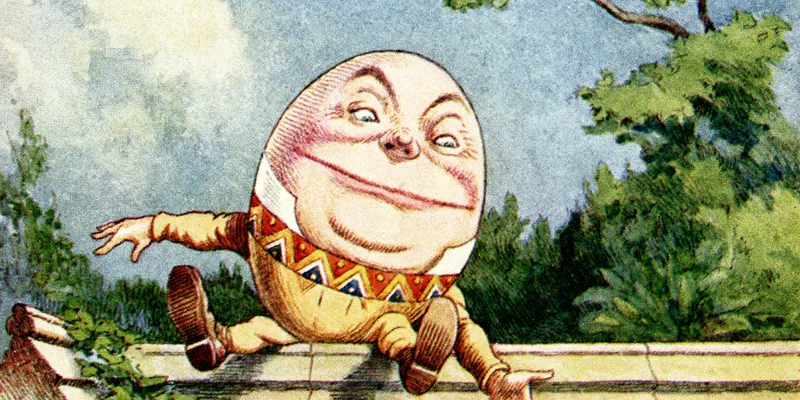
Interestingly, the earliest printed versions did not mention an egg at all. That detail came later through illustrations, especially in the nineteenth century.
The version closest to what we know appeared in 1797, when English composer Samuel Arnold published a slightly different wording. Over time, small changes shaped the rhyme into its modern form.
Was Humpty Dumpty Originally a Riddle?
Before it became a nursery rhyme, Humpty Dumpty functioned as a riddle. The answer, of course, is an egg. Once broken, it cannot be restored, which explains the line about the king’s men failing to fix it.
This helps explain why the rhyme never explicitly describes Humpty. The audience was expected to guess.
Only later did artists turn Humpty into a character rather than a puzzle, fixing the egg image permanently in popular culture.
The Richard III Theory
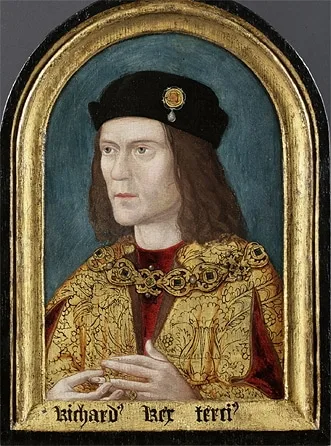
One of the more intriguing interpretations in the history Humpty Dumpty debate connects the rhyme to King Richard III, who ruled England from 1483 to 1485.
Richard’s reign ended dramatically at the Battle of Bosworth Field. He was killed in combat while fighting Henry Tudor, who would become Henry VII.
Some historians have suggested parallels between the rhyme and Richard’s life:
- Richard had scoliosis, giving him a visibly uneven posture
- He allegedly fell from his horse during battle
- His forces failed to save him, echoing “all the king’s men”
There’s also a curious detail in later storytelling that his horse may have been called “Wall,” which would make the famous line more symbolic than literal.
Still, this theory remains speculative. It reflects how people have tried to anchor the rhyme in real historical events tied to notable characters in children’s literature and beyond.
The English Civil War Cannon Story
Another explanation places Humpty Dumpty in the middle of the seventeenth century during the English Civil War.
According to this account, “Humpty Dumpty” was the nickname of a large cannon positioned on the walls of Colchester in 1648. During a siege by Parliamentary forces, the wall beneath the cannon was destroyed, sending it crashing down.
The Royalists, loyal to King Charles I, tried but failed to lift it back into position.
This version fits the rhyme almost perfectly:
- The “wall” is literal
- The “great fall” refers to the cannon’s collapse
- The “king’s men” are Royalist soldiers unable to recover it
It’s a neat story, but like the Richard III theory, there’s no firm evidence tying it directly to the rhyme’s earliest versions.
Slang, Drink, and Folklore
Not all explanations involve kings or battles. In fact, some are far less grand.
In seventeenth and eighteenth century England, “Humpty Dumpty” was slang. It could refer to:
- A drink made from brandy and ale
- A clumsy or stout person
- Someone who had perhaps had too much to drink
This paints a very different picture. Instead of a tragic fall from power or a battlefield mishap, Humpty Dumpty might have been a humorous figure used in everyday speech.
That kind of language often fed into early rhymes and folk verses, especially within the context of medieval tales and folklore, where humor and insult mixed freely.
How the Egg Took Over
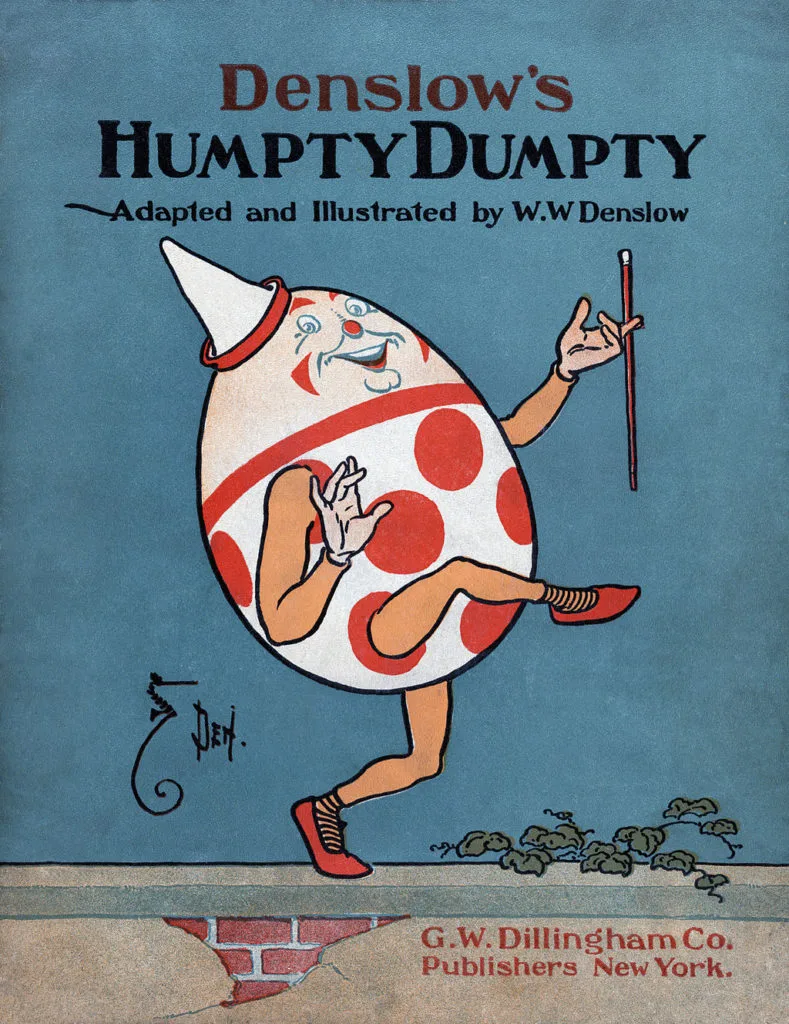
For centuries, nothing in the rhyme explicitly said Humpty Dumpty was an egg. That image became dominant only in the nineteenth century.
Illustrators, especially those working on children’s books, began depicting Humpty as a fragile egg-like figure. One of the most influential portrayals appeared in Lewis Carroll’s Through the Looking-Glass (1871), where Humpty is unmistakably an egg.
From that point on, the visual identity stuck. Today, it’s almost impossible to separate the character from that image.
So What Is the Real Origin?
The honest answer is that there isn’t just one.
The humpty dumpty origin appears to be layered. Over time, different meanings and stories merged:
- A possible medieval riddle
- Historical interpretations tied to Richard III
- Civil War legends about a fallen cannon
- Everyday slang and humor
Each generation reshaped the rhyme to match its own world. That’s part of what makes it so enduring.
Why Humpty Dumpty Still Matters
At first glance, it’s just a short children’s rhyme. But look closer, and it reflects how stories evolve. Words shift. Meanings blur. New interpretations replace old ones.
Humpty Dumpty isn’t just about a fall. It’s about how culture builds, breaks, and rebuilds stories over time.
FAQ
What is Humpty Dumpty originally supposed to be?
Originally, Humpty Dumpty was likely the answer to a riddle: an egg. However, early versions of the rhyme never explicitly say this.
Is Humpty Dumpty based on a real person?
Some theories connect him to King Richard III, but there is no definitive evidence. The idea remains speculative.
Was Humpty Dumpty a cannon?
One popular theory claims Humpty Dumpty was a cannon used during the 1648 siege of Colchester. While it fits the rhyme well, it is not proven.
When was the Humpty Dumpty rhyme first written?
The rhyme appeared in print in the late eighteenth century, with a version published in 1797 by Samuel Arnold.
Why is Humpty Dumpty always shown as an egg?
The egg imagery became popular in the nineteenth century through illustrations and literary works like Lewis Carroll’s Through the Looking-Glass.
Sources
- Iona Opie and Peter Opie (eds.), The Oxford Dictionary of Nursery Rhymes (Second Edition, Oxford, 1997), pp. 213–215.
- Chris Skidmore, Bosworth: The Birth of the Tudors (London, 2014).
- Alf Thompson, ‘The Siege of Colchester, 1648: The Earl of Northampton’s Regiment Orders of the Day’, in The Sealed Knot, Vol. 32, No. 2 (April, 2000).
