

Table of Contents
The name Princess Qajar often appears online alongside a striking photograph and a sensational claim about beauty and rejected suitors. But the reality behind this Persian royal is far more compelling and historically grounded than internet myths suggest.
Short answer: The woman commonly called Princess Qajar was Zahra Khanom Tadj es-Saltaneh, a Qajar princess of Persia born in 1883. She was not a beauty icon surrounded by tragic admirers, but a writer, activist, and early advocate for women’s rights during a period of social and political change in Iran.
Who Was Princess Qajar of Persia?
The figure widely labeled as “Princess Qajar” is Zahra Khanom Tadj es-Saltaneh, a daughter of Naser al-Din Shah Qajar, ruler of Persia. She lived during the late 19th and early 20th centuries, a time tied closely to the transformative era of the early modern period.
Born in 1883 into the royal Qajar dynasty, she grew up in a world of privilege, but also one marked by rigid hierarchy and gender inequality. Unlike many royal figures remembered only for their lineage, this Persian princess left behind a personal and intellectual legacy.
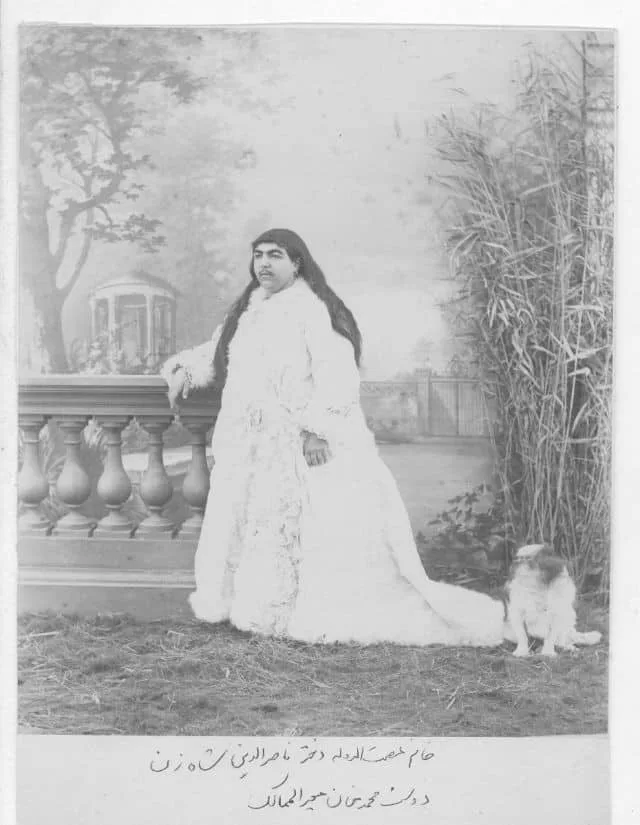
She was not simply a royal daughter. She was:
- A memoirist whose writings are still studied
- A painter and musician
- A multilingual intellectual fluent in Persian, Arabic, and French
- An early advocate for women’s rights in Iran
Her life offers a rare, firsthand perspective on elite Persian society from a woman’s point of view.
A Voice for Reform and Women’s Rights
What sets Princess Qajar apart from many of her contemporaries is her willingness to challenge the system she was born into. She became involved in political and social reform movements, particularly those tied to women’s rights.
She helped establish Anjoman Horriyyat Nsevan, a women’s organization that pushed for greater freedoms and social participation. Meetings were often held discreetly, reflecting the risks associated with such activism at the time.
Her actions were bold for her era. She publicly removed her veil in certain settings and participated in demonstrations supporting constitutional governance in Iran.
Even more striking, she openly criticized her father’s rule. She linked Persia’s struggles, including limited access to education and widespread inequality, to decisions made by the ruling elite. Few royals spoke so candidly about their own family’s governance.
Her life places her among other influential figures in Persian history who shaped the country’s path beyond royal courts.
Life Inside the Royal Court
Princess Qajar’s early years were spent within the royal harem, an environment that deeply influenced her worldview. In her memoirs, she described not only luxury but also the suffering of others, particularly enslaved individuals and women with little autonomy.
These experiences left a lasting impression. They informed her later critiques and her desire for reform.
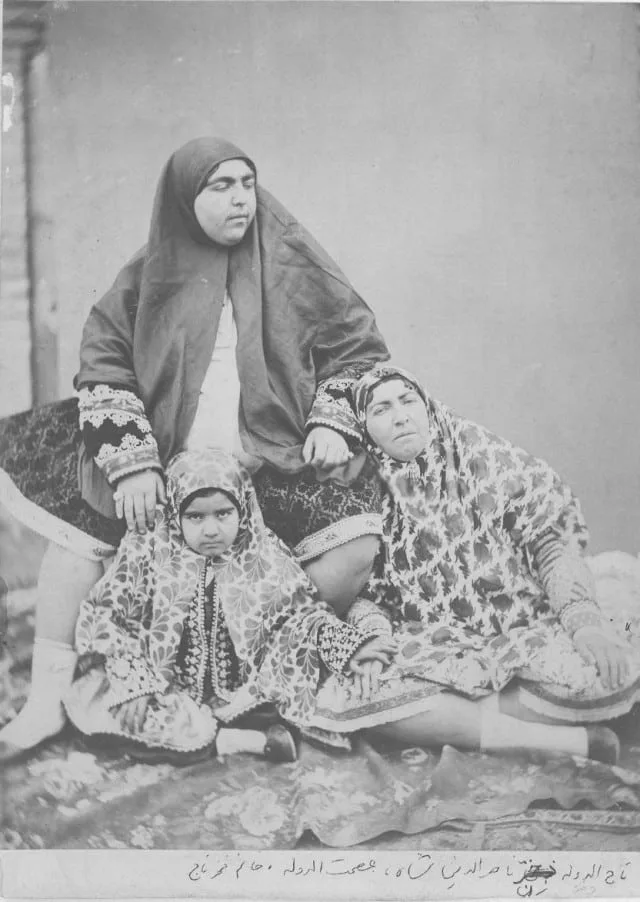
Marriage and Personal Struggles
Her personal life was shaped by customs common in elite Persian society at the time:
- She was betrothed at the age of eight
- Married at thirteen to a man connected to the royal court
- Became a mother to four children
The marriage was not a happy one. Her husband’s repeated infidelity led her to seek a divorce, a decision that carried social stigma, especially for a woman of her status.
Despite this, she chose independence. She later lived with her daughter and granddaughter, continuing to write and reflect on her experiences.
Beauty Standards in Qajar-Era Persia
Part of the fascination with Princess Qajar comes from her appearance in photographs. To modern viewers, her look may seem unusual. But it makes sense when viewed in historical context.
In 19th-century Persia, beauty standards differed sharply from today’s global norms. Features that might now be seen as unconventional were often admired.
- Thick, connected eyebrows were considered attractive
- A faint mustache on women could be emphasized with cosmetics
- Men were sometimes idealized with softer, more delicate features
These aesthetics were part of a broader cultural framework, not a reflection of individual eccentricity. Princess Qajar’s appearance aligned with the tastes of her time, rather than standing apart from them.
The Viral Myth: Separating Fact from Fiction
The modern internet has turned Princess Qajar into a meme, often repeating dramatic and unsupported claims. Two of the most common deserve a closer look.
Was She a Legendary Beauty?
There is no credible historical evidence that she was celebrated as a defining beauty icon of her era. While her appearance matched certain cultural preferences, that alone does not make her a symbol of beauty across society.
This idea oversimplifies her life and distracts from her real contributions.
Did Suitors Take Their Lives Over Her?
The claim that multiple men died by suicide after being rejected by her is entirely unsubstantiated. Historical records do not support this story.
In fact, given that she was married at a young age in an arranged union, the notion of numerous rejected suitors is highly unlikely.
Why Her Story Matters Today
The real story of this Qajar princess is far richer than any viral myth. She documented her life in a way few women of her time could, offering insight into royal life, gender roles, and political change in Persia.
Her memoirs continue to be studied in academic settings, particularly in Middle Eastern history and gender studies. Through them, she remains a voice that challenges both historical and modern misconceptions.
Reducing her to a meme misses the point entirely. She was not just a face in a photograph. She was a thinker, a critic, and a participant in a pivotal period of Iranian history.
FAQ About Princess Qajar
Who was Princess Qajar?
Princess Qajar refers to Zahra Khanom Tadj es-Saltaneh, a daughter of Naser al-Din Shah Qajar and an influential Persian royal known for her writings and activism.
Was Princess Qajar really a beauty icon?
No clear historical evidence supports the idea that she was widely regarded as a defining beauty symbol. Her appearance reflected the standards of her time.
Is it true that men died for her love?
No, this claim is a modern myth with no historical backing.
What did Princess Qajar accomplish?
She was a writer, artist, and early advocate for women’s rights, and she participated in reform movements during Iran’s constitutional period.
Why does she appear unusual in photos?
Her appearance aligns with 19th-century Persian beauty standards, which valued features such as strong eyebrows and visible facial hair.
